
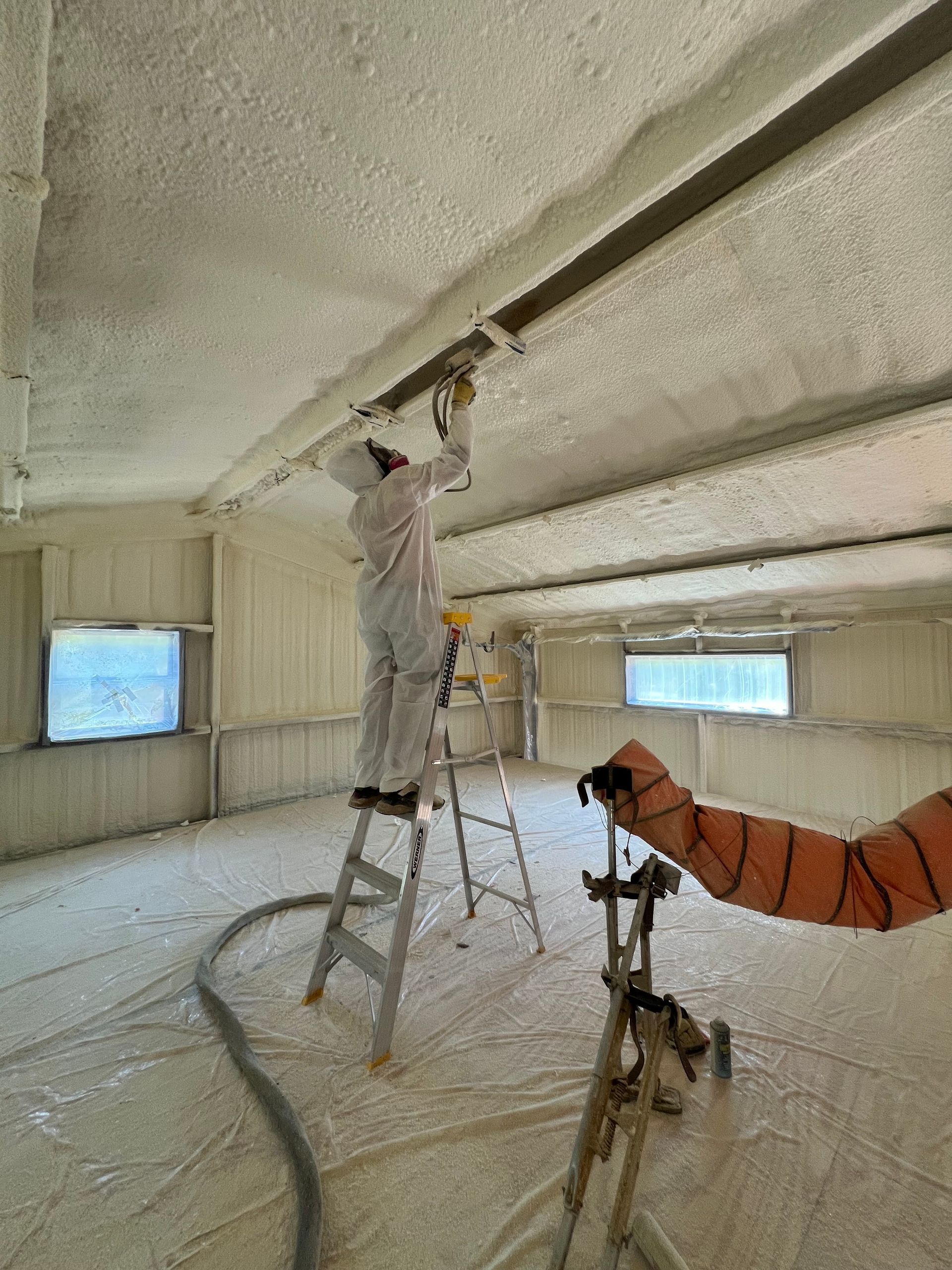
Dense Foam for Demanding Applications
Closed Cell in Austin for metal buildings, exterior walls, and structures requiring moisture-resistant insulation
Closed cell spray foam delivers higher R-value per inch than any other common insulation material, which makes it the solution when space is limited or when the building envelope requires both thermal performance and structural reinforcement. ET Insulation installs closed cell foam in Austin properties where moisture resistance matters—metal buildings without interior vapor barriers, exterior walls in high-performance homes, and crawl spaces where ground moisture creates persistent humidity. The foam's dense, closed cellular structure blocks both air and water vapor, creating a barrier that functions as insulation, air seal, and vapor retarder in a single application.
Installation involves spraying liquid foam that expands to a rigid, firm texture as it cures, bonding directly to metal, wood, concrete, and other substrates. The material reaches R-6 to R-7 per inch, so achieving code-required R-values takes less cavity depth compared to open cell or fiberglass, which matters in walls with 2x4 framing or applications where interior space cannot be sacrificed. Closed cell foam also adds racking strength to wall assemblies, which is why it is specified in coastal or high-wind areas, though in Austin the primary drivers are thermal performance and moisture control.
Request an on-site assessment to determine whether closed cell foam addresses your building's insulation and durability needs.
What Proper Closed Cell Installation Requires
Application demands precise equipment calibration, correct chemical ratios, and controlled spray technique to achieve uniform density and thickness throughout the project area. The foam is applied in thinner lifts than open cell to manage the heat generated during the curing reaction, and each pass must bond to the substrate and the previous layer without delamination. Installers monitor surface temperature and adjust application rates when working on metal substrates that conduct heat differently than wood framing.
Once the foam cures, you notice that the building holds temperature with less HVAC runtime and that condensation problems on metal surfaces or in rim joist areas stop occurring. The foam remains rigid and in full contact with the structure, so thermal performance does not degrade, and because the material blocks vapor movement, interior humidity levels become easier to manage. In metal buildings, the foam eliminates the temperature differential that caused interior surfaces to sweat during humid weather, and in homes with vented crawl spaces converted to conditioned space, ground moisture no longer affects indoor air quality.
Closed cell foam is often specified in garages, bonus rooms over unheated spaces, and commercial buildings where energy costs justify the higher material expense. The service includes surface preparation to remove oils or contaminants that prevent adhesion, applying the foam to the specified thickness, and trimming excess material flush with framing for drywall installation.
Common Questions About This Service
Closed cell foam projects involve material costs and application details that require clear answers before construction or remodeling begins.
What makes closed cell foam cost more than open cell or fiberglass?
The chemical formulation uses more expensive raw materials, the application process requires more precise equipment and technique, and the material is denser, meaning more product is needed per square foot, but the higher R-value per inch means less thickness is required to meet energy code requirements.
How does closed cell foam function as a vapor barrier in mixed-humid climates like Austin?
At thicknesses above two inches, closed cell foam has a vapor permeance low enough to classify it as a Class II vapor retarder, which prevents moisture-laden air from reaching cold surfaces inside wall cavities during summer cooling cycles when outdoor humidity is high.
What building types benefit most from closed cell foam's structural reinforcement properties?
Metal buildings with post-frame or pole-barn construction gain racking strength from foam applied to the interior of metal panels, and older homes with balloon framing or unreinforced walls see measurable increases in stiffness after closed cell foam is installed in exterior wall cavities.
When should closed cell foam be used instead of open cell in residential construction?
Closed cell is the choice when the wall cavity is shallow and high R-value is required, when the area is subject to bulk water exposure such as below-grade walls, or when the project includes metal surfaces that require both insulation and condensation control.
What preparation does a metal building need before closed cell foam is applied?
Metal surfaces must be clean, dry, and free of oils, rust inhibitors, or loose mill scale, and any fasteners or structural elements that should remain accessible need to be marked or masked before spraying begins.
ET Insulation recommends insulation systems based on each property's specific construction type and performance objectives. Contact our team to request a closed cell spray foam estimate that accounts for your building's design and energy efficiency goals.