
Insulation That Stops Air Where It Starts
Spray Foam in Austin for properties losing conditioned air through hidden gaps and cracks
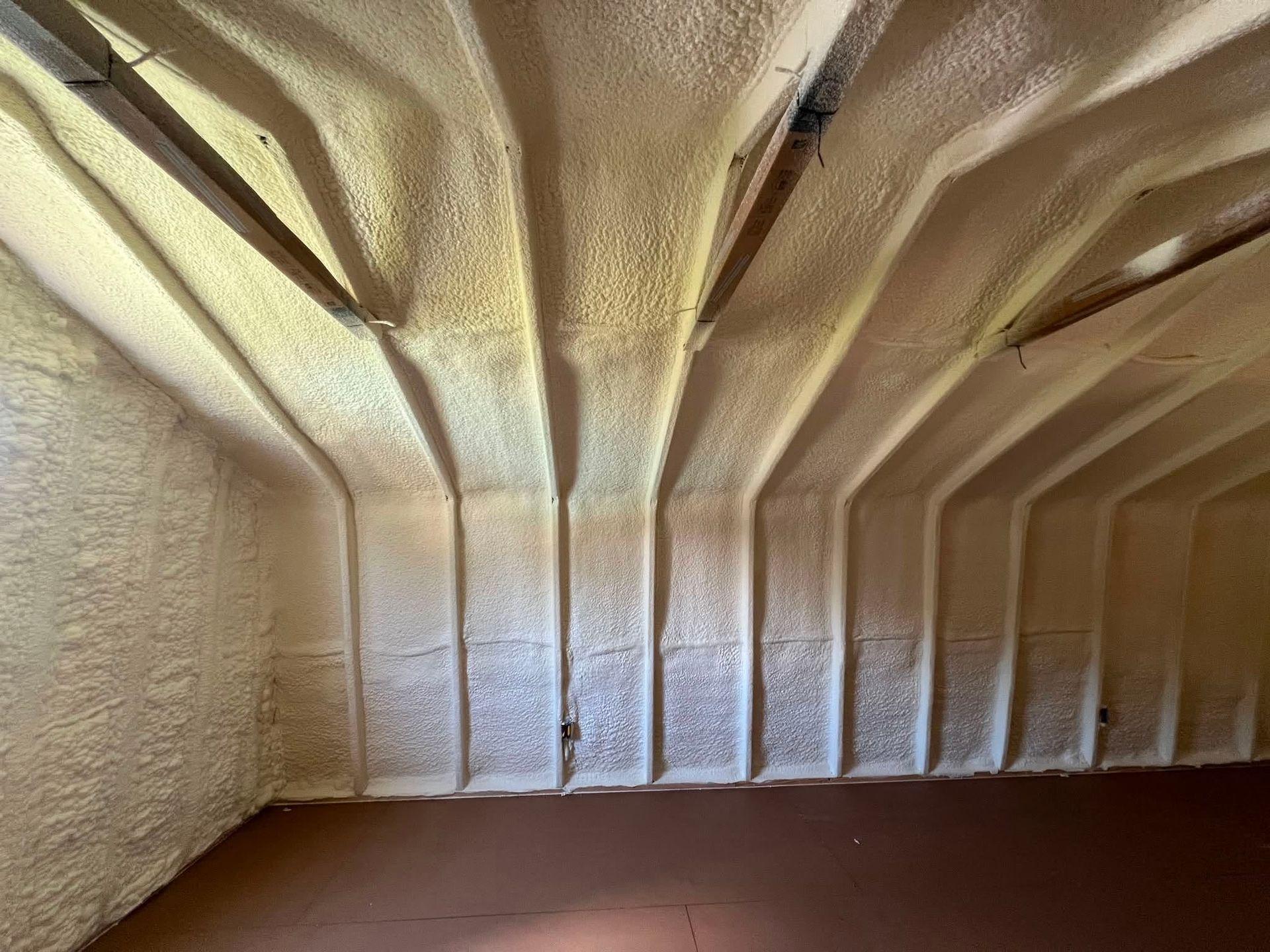
ET Insulation installs spray foam insulation in Austin homes and commercial buildings where traditional materials leave air pathways open. You need this when energy bills remain high despite running heating and cooling systems constantly, or when certain rooms never reach comfortable temperatures no matter how the thermostat is adjusted. Spray foam expands into cavities that batts and blown products cannot reach, sealing the building envelope at the framing level.
The service involves applying liquid foam that expands on contact, filling gaps around wiring penetrations, pipe chases, rim joists, and irregular framing where air typically moves freely between conditioned and unconditioned spaces. Both open cell and closed cell formulations are available depending on whether the priority is sound dampening and cost efficiency or maximum insulating value and moisture resistance. Each project gets evaluated for the right foam type based on building design, climate control goals, and existing construction details.
Schedule a property evaluation to identify where air leakage is affecting your building's thermal performance.
What Happens After Foam Application Completes
Once spray foam cures, it forms a continuous barrier that stops air movement at the building's thermal boundary. Installation requires surface preparation, correct mixing ratios, and controlled application thickness to meet manufacturer specifications and building code requirements. The foam bonds directly to framing, sheathing, and substrates, creating a seal that remains intact as the building shifts and settles over time.
You notice that rooms reach set temperatures faster and hold them longer without the HVAC system cycling as frequently. Drafts around outlets, baseboards, and ceiling fixtures disappear because the foam has sealed the pathways where outside air was entering. Energy bills drop as heating and cooling equipment runs fewer hours to maintain the same comfort level, and indoor humidity becomes easier to control because moisture-laden outside air no longer infiltrates through unsealed cracks.
ET Insulation handles installations in existing homes during remodels, new residential construction, and commercial buildings where energy performance directly affects operating costs. The service includes protecting surrounding surfaces during application, verifying proper cure times before covering with drywall or finishes, and confirming that all target areas receive adequate coverage. Jobs in Austin often require coordination with electricians and HVAC contractors to ensure foam application happens after rough-in work but before final inspections.
What Property Owners Ask Before Installation
Spray foam installations raise practical questions about material selection, application methods, and long-term performance that affect project planning and budgeting.
What determines whether open cell or closed cell foam is recommended?
Open cell foam expands more and costs less per square foot, making it effective for interior walls and attic applications where sound control matters, while closed cell foam provides higher R-value per inch and moisture resistance, making it the choice for exterior walls, metal buildings, and areas where space is limited or moisture exposure is possible.
How long does spray foam need to cure before the space can be occupied?
Most formulations cure enough for drywall installation within 24 hours, though full curing takes several days, and proper ventilation during and immediately after application helps dissipate any residual odor from the chemical reaction that creates the foam.
What preparation does the area need before foam is applied?
All electrical wiring, plumbing, and HVAC ducts must be installed and inspected, surfaces need to be dry and free of dust or loose debris, and anything that should not be coated—such as junction boxes or recessed light housings—gets masked off before spraying begins.
Why do spray foam projects in Austin sometimes require vapor barrier considerations?
The region's mixed-humid climate means buildings experience both heating and cooling loads, and closed cell foam acts as a vapor retarder on its own, while open cell applications may require additional vapor control depending on wall assembly design and whether the building is conditioned year-round.
What affects the total cost of a spray foam insulation project?
Factors include the foam type selected, total square footage being insulated, accessibility of the areas being sprayed, building height, and whether existing insulation needs removal before new foam is applied.
ET Insulation evaluates every project to recommend the insulation system that matches the building's construction type and performance goals. Request a detailed estimate that identifies which foam formulation addresses your specific energy efficiency and comfort concerns.