
Moisture Control That Protects Structural Integrity
Crawl space encapsulation in Austin for homes with humidity issues and musty odors
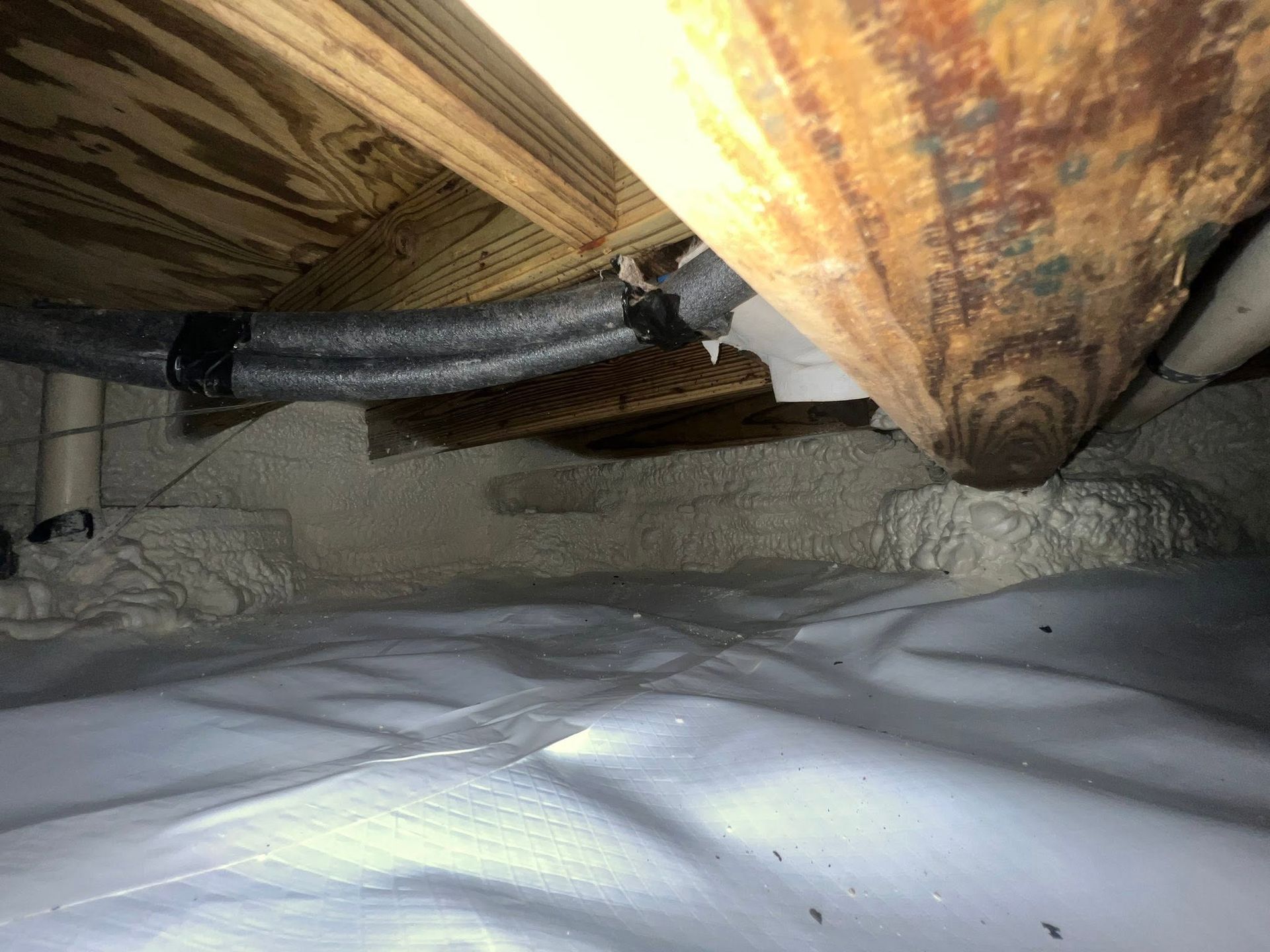
Crawl spaces left open to outside air allow moisture to enter the home's foundation, creating conditions where humidity accumulates, wood absorbs water, and air quality throughout the house deteriorates. ET Insulation designs encapsulation systems that seal crawl spaces from ground moisture and outside air, creating a controlled environment that supports overall home performance and prevents the long-term damage associated with repeated wetting and drying cycles. Homes built on pier-and-beam foundations in Austin often experience elevated indoor humidity, drafts through flooring, and increased energy costs because unconditioned crawl space air moves freely into living areas above.
Encapsulation involves installing heavy-duty vapor barriers across crawl space floors and up foundation walls, sealing vents that previously allowed outside air to enter, and insulating the foundation walls or floor joists to create a thermal boundary. Austin's variable humidity means crawl spaces without vapor barriers can introduce significant moisture loads into the home, which HVAC systems must work constantly to remove while dehumidification remains incomplete. The process includes addressing drainage issues that allow water to pool under the structure and installing barriers that prevent ground moisture from evaporating into the enclosed space.
Request a crawl space encapsulation estimate to identify moisture sources affecting your foundation and determine which sealing approach addresses those specific conditions.
Why Encapsulation Works for Foundation Environments
Crawl space projects begin with inspecting the foundation for standing water, drainage problems, damaged insulation, and any structural concerns that require attention before encapsulation. Vapor barriers are installed in overlapping sheets with sealed seams, then mechanically fastened to foundation walls and piers to create a continuous moisture barrier between the ground and the enclosed space. Insulation is applied to foundation walls rather than floor joists when the crawl space will be conditioned, which prevents pipes from freezing during occasional winter cold snaps while keeping the floor above closer to indoor temperatures.
After encapsulation, floors above the crawl space feel warmer during winter and less drafty year-round because conditioned air no longer escapes through gaps in the flooring assembly. Indoor humidity levels stabilize because moisture from the ground is blocked, which reduces the workload on air conditioning systems during humid months and creates less favorable conditions for mold growth on organic materials. Musty odors that previously indicated crawl space moisture no longer migrate into living areas, and stored items in the crawl space remain dry instead of absorbing humidity.
Proper encapsulation requires addressing bulk water issues before sealing the space, because trapping water inside an enclosed crawl space without drainage solutions creates worse conditions than leaving vents open. Grading corrections, gutter improvements, and French drains are often completed alongside encapsulation to ensure water moves away from the foundation rather than accumulating under the structure.
What Property Owners Usually Ask
Homeowners preparing for crawl space work typically want to understand how encapsulation affects their foundation and what the project involves.
What causes moisture problems in crawl spaces under Austin homes?
Crawl space moisture comes from ground evaporation when soil beneath the structure releases water vapor that rises into the enclosed area. Rain runoff and poor grading can allow water to pool under the home, and open vents that were intended to provide airflow often introduce humid outdoor air that condenses on cooler surfaces inside the crawl space.
How does crawl space encapsulation improve indoor air quality?
Encapsulation seals the crawl space from ground moisture and outside air, which prevents humid, potentially contaminated air from rising into living spaces through floor penetrations and gaps in the subfloor. Homes with unsealed crawl spaces often circulate air that has passed over damp soil, insulation, and deteriorating organic materials, carrying odors and particulates into occupied areas.
When should crawl space vents be sealed during encapsulation?
Vents are sealed as part of the encapsulation process because leaving them open would reintroduce outside air and moisture into the newly sealed space, defeating the purpose of the vapor barrier. Once the crawl space is encapsulated and becomes part of the conditioned building envelope, it no longer requires ventilation from outside air.
What type of vapor barrier is used in crawl space encapsulation projects?
Heavy-duty reinforced polyethylene barriers, typically 10 to 20 mils thick, are used because they resist punctures from crawl space traffic and create a durable moisture barrier that lasts for decades. Thinner materials can tear during installation or deteriorate over time, allowing moisture to penetrate the encapsulated space and reducing the effectiveness of the system.
How does encapsulation affect heating and cooling costs in Austin homes?
Encapsulation reduces energy costs by preventing conditioned air from escaping through the floor assembly and eliminating the need for HVAC systems to continuously dehumidify air drawn from an open, humid crawl space. The thermal boundary created by insulation and air sealing means less heat enters during summer and less warmth escapes during winter, which reduces runtime for both cooling and heating equipment.
ET Insulation assesses crawl space conditions throughout Austin to identify moisture sources, drainage concerns, and insulation needs that affect home performance and comfort. Schedule a thorough evaluation to determine which encapsulation approach addresses your foundation's specific conditions and delivers measurable improvements to air quality and energy efficiency.