
Cost-Effective Insulation Installed Correctly
Fiberglass in Austin for homes, attics, and commercial buildings where budget and code compliance intersect
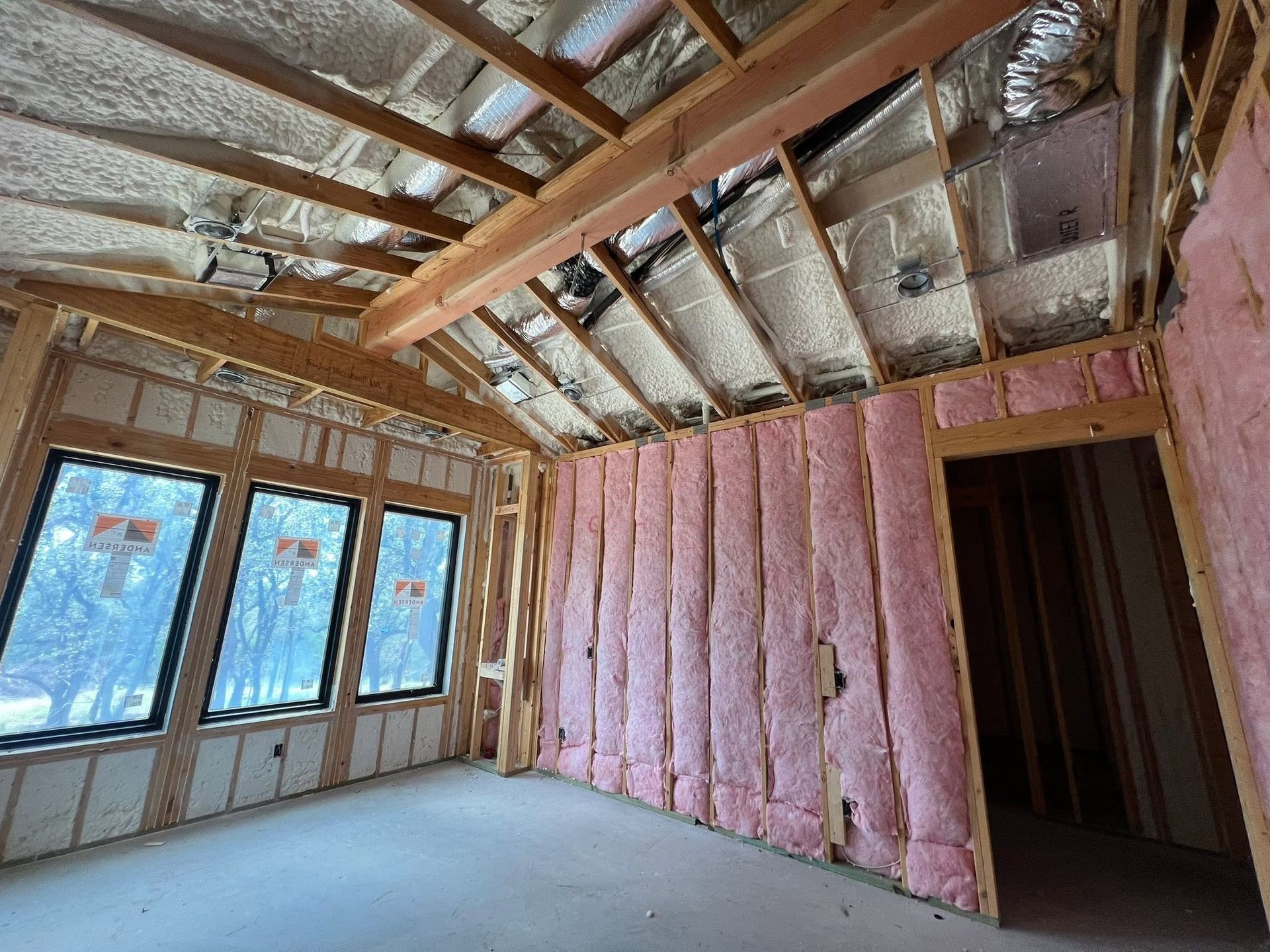
Fiberglass batts that compress around wiring or leave gaps along ceiling joists fail to deliver their rated R-value, which is why proper installation technique matters as much as the product itself. ET Insulation installs fiberglass insulation in Austin properties where builders and homeowners need reliable thermal performance without exceeding construction budgets. The material fits walls, attics, floors, and ceiling assemblies in new construction, remodels, and retrofit projects, and when installed with attention to full-cavity fill and continuous contact with all six sides of the framing bay, it performs as designed for decades.
The process involves cutting batts to fit each cavity precisely, splitting the insulation around wiring and plumbing rather than compressing it, and ensuring that the material makes full contact with the drywall or sheathing on all edges. Gaps as small as 5 percent of the insulated area can reduce overall thermal performance by 25 percent, which is why installers take time to trim and fit material around obstacles rather than forcing oversized pieces into place. Attic installations require maintaining proper depth across the entire floor area and ensuring that insulation does not block soffit vents or contact recessed light fixtures not rated for insulation contact.
Schedule an insulation consultation to determine the correct R-value and installation approach for your property.
How Fiberglass Addresses Thermal Performance Goals
Fiberglass works by trapping air within its fiber matrix, slowing conductive heat transfer through building assemblies. The material's effectiveness depends entirely on installation quality—batts must fill the cavity completely without compression, and any gaps or voids allow air convection loops that bypass the insulation. In attics, maintaining uniform depth and preventing wind-washing at eaves keeps the insulation performing at its rated R-value year after year.
After installation is complete, you notice that rooms reach comfortable temperatures more quickly and that the HVAC system cycles less frequently to maintain set points. Temperature differences between rooms decrease because the building envelope now resists heat flow consistently, and attic installations reduce the ceiling surface temperature in summer, which lowers radiant heat transfer into living spaces below. In existing homes where old insulation has settled or compressed, adding new fiberglass to restore the target R-value brings immediate improvement in comfort and energy costs.
The service includes selecting the correct batt thickness and facing type for each application, ensuring vapor retarder orientation meets code requirements, and verifying that insulation does not create fire or safety hazards around electrical fixtures. Faced batts get stapled to framing members with the facing toward the conditioned space, while unfaced batts are used in attics or where a separate vapor retarder is installed.
Answers to Frequent Service Questions
Fiberglass insulation projects involve product selection and installation details that affect both code compliance and long-term thermal performance.
What R-value of fiberglass insulation is required for walls and attics in Austin?
Current energy codes typically require R-13 in exterior walls with 2x4 framing or R-15 in 2x6 walls, and attics need R-30 to R-38 depending on whether the space is vented or unvented, with higher values improving energy performance beyond code minimums.
How does fiberglass insulation perform in Austin's hot, humid summers?
Fiberglass itself does not provide an air barrier, so air sealing at penetrations, top plates, and rim joists is necessary to prevent warm, humid outdoor air from entering wall cavities and contacting cooler interior surfaces where condensation can occur during cooling season.
What is the difference between faced and unfaced fiberglass batts?
Faced batts include a kraft paper or foil vapor retarder on one side and are used in walls and floors where moisture control is required, while unfaced batts are used in attics or applications where a separate vapor barrier is installed, and using the wrong type in the wrong location can trap moisture and cause mold or rot.
When should existing fiberglass insulation be removed before adding new material?
Old insulation that has been contaminated by water damage, mold, rodent activity, or attic fires must be removed and disposed of properly, and compressed or settling insulation in walls sometimes needs removal during remodels to allow for spray foam or higher-density products.
What installation practices ensure fiberglass insulation performs at its rated R-value?
Batts must be cut to fit each cavity without gaps, split around wiring rather than compressed, installed with the facing in the correct orientation, and maintained at full thickness without crushing or folding, and attic insulation must maintain depth across the entire floor area without blocking ventilation paths.
ET Insulation handles fiberglass installations with attention to proper fit, complete coverage, and code compliance for lasting thermal performance. Request an estimate that identifies the correct product and installation method for your building's specific needs.